Raising the Dust by Theresa Jones
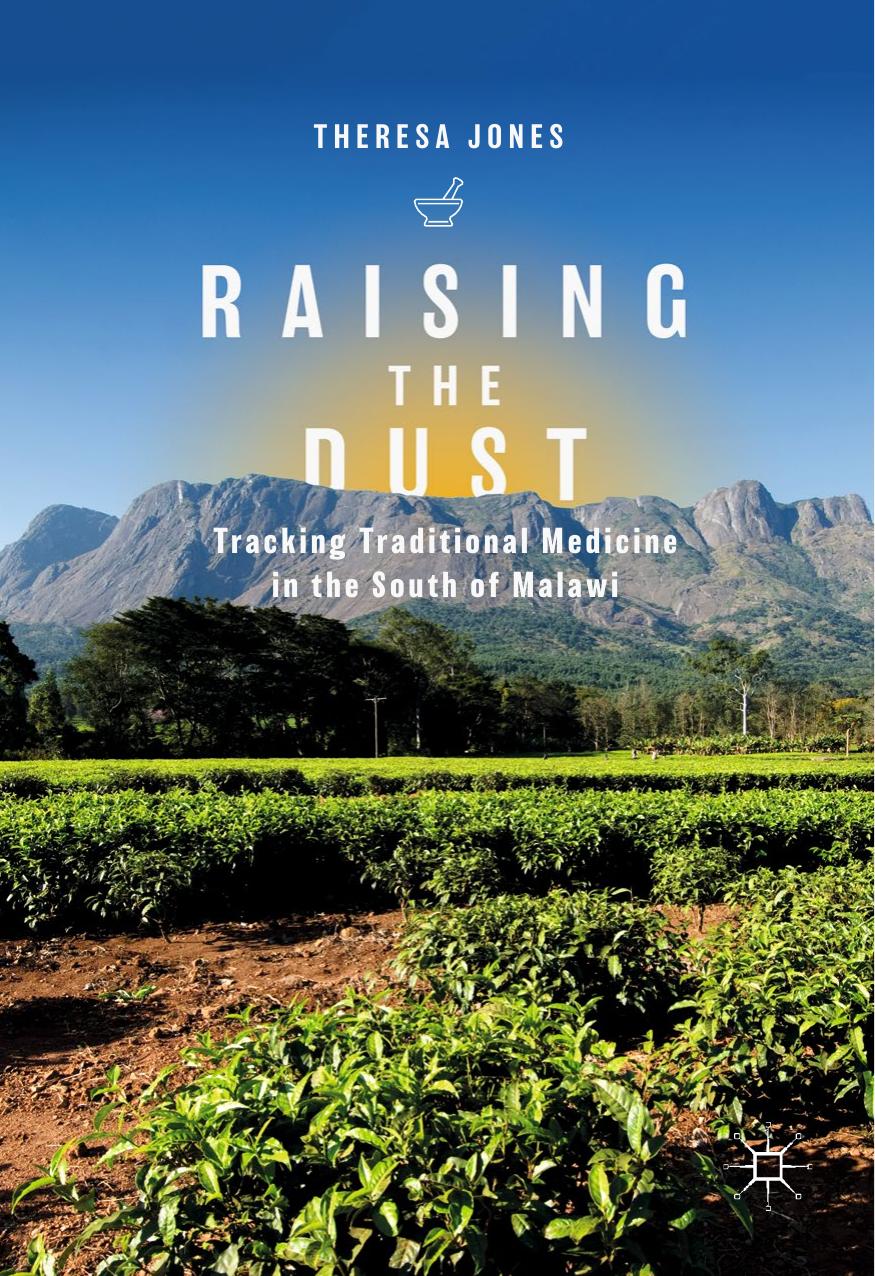
Author:Theresa Jones
Language: eng
Format: epub, pdf
Publisher: Springer Singapore, Singapore
Accessing Health Care
Healing is a journey. To be healthy is to be in a state of balance. To stay healthy is to keep moving and changing towards a state of equilibrium. Aldridge states that the maintenance and promotion of health towards this equilibrium is therefore an activity, “expressed bodily, [as] a praxis aesthetic” (2004a:132). Traditional healers engage in this ‘praxis aesthetic’ by using their bodies in their daily practices. For instance, participants talked about moving constantly between people, plants and place. By engaging with the local community and the wider environment in this way, they bring a uniquely earth-based aspect to their everyday knowledge and practices. In order to get from one location to another, they described walking over vast distances , often with bare feet touching the earth. In doing so, they are moving continuously so as to restore a positive state of harmony and balance. It is thus not surprising that moving, motion and mobility emerged as notable themes throughout their interviews.
When people get sick in Malawi they can consult a range of health care services, but if they choose to attend a free public medical facility, like a clinic or a hospital, they are obliged to find their own way there, but with limited transport options. People access public health services in a number of ways, such as; walking , bicycling, minibus transport, bicycle taxi or by the free ambulance service. When people become ill, each of these modes is problematic. Walking and bicycling become difficult due to the sick person’s low energy levels. Furthermore, the roads and tracks around the mountain are often inaccessible to anything but four-wheel drive vehicles, and not surprisingly, minibuses, a common mode of transport, do not travel on the track-like roads (see Image 6.1) that connect villages in the rural areas. Additionally, rising costs, due to the devaluation of the Malawi kwacha at the time of fieldwork, made minibus travel prohibitive for many. Moreover, family income can be reduced during illness since the patient is unable to maintain their income generating and other livelihood sustaining activities.
Image 6.1The ‘road’ to Nessa village
Download
This site does not store any files on its server. We only index and link to content provided by other sites. Please contact the content providers to delete copyright contents if any and email us, we'll remove relevant links or contents immediately.
Inner Engineering: A Yogi's Guide to Joy by Sadhguru(6835)
The Power of Now: A Guide to Spiritual Enlightenment by Eckhart Tolle(5854)
Fear by Osho(4776)
Ikigai by Héctor García & Francesc Miralles(4310)
The Art of Happiness by The Dalai Lama(4167)
The Ultimate Bodybuilding Cookbook by Kendall Lou Schmidt(3979)
Yoga Therapy by Mark Stephens(3771)
The Little Book of Hygge by Meik Wiking(3719)
The Healing Self by Deepak Chopra(3633)
Why Buddhism is True by Robert Wright(3493)
The Hatha Yoga Pradipika (Translated) by Svatmarama(3411)
Being Aware of Being Aware by Rupert Spira(3296)
Shift into Freedom by Loch Kelly(3232)
Wild Words from Wild Women by Stephens Autumn(3191)
Work Clean by Dan Charnas(3160)
Happiness by Matthieu Ricard(3078)
More Language of Letting Go: 366 New Daily Meditations by Melody Beattie(3057)
Yoga Body & Mind Handbook by Jasmine Tarkeshi(2903)
Why I Am Not a Feminist by Jessa Crispin(2783)
